Editorial: The Demise of Kadey Krogen and American Tug – Feature: Multimeters; AC and DC Voltage Measurement and Troubleshooting
From the Masthead

The Demise of Kadey Krogen and American Tug
This was not the subject I intended to discuss this month, however, it’s the 600-pound gorilla in the room, and so it can’t be ignored.
These are products with which I have intimate familiarity; I have inspected and sea trialed dozens of each, and have consulted on new builds for both.
Forums and YouTube channels (some of which repeatedly and painfully misspell or mispronounce ‘Kadey Krogen’) are rife with armchair experts and pundits, many of whom are claiming that Kadey Krogen Yachts/American Tug (KKY hereafter) is the proverbial canary in the coal mine, and more are soon to follow (ostensibly on the heels of Catalina and West Marine, scenarios completely divorced from KKY’s), all a result of tariffs, or interest rates, or inflation, or competition, or Iran, take your pick.
There’s a familiar axiom in the news business, ‘if it bleeds it leads’, and I believe it applies in this situation. As unfortunate as KKY’s fate is, I don’t believe it’s indicative of problems that are affecting the boat building industry, for vessels like these, as a whole. I work with many builders, the big ones, Fleming, Nordhavn, Selene, Marlow, and Grand Banks/Palm Beach, along with a slew of smaller ones; I’m at their yards in Asia (including KKY’s independent but exclusive yard, Asia Harbor, in Taiwan) and Europe on a regular basis. Most are healthy, many are thriving, with backlogs, but that’s not the stuff rumors are made of, and it’s not nearly as interesting to talk about these success stories. Telling anyone who will listen you have a crystal ball, and it foretells doom and gloom, generates far more clicks.
I have worked at the Asia Harbor yard on many occasions; while they have collaborated for decades, this yard is completely independent of KKY, and Asia Harbor is still building Krogen Express yachts, which are also a completely separate entity from KKY. It is among the best run, cleanest, and most professional yards I have ever encountered in Taiwan or anywhere else, and the owner and staff simply could not be nicer, or more hospitable.
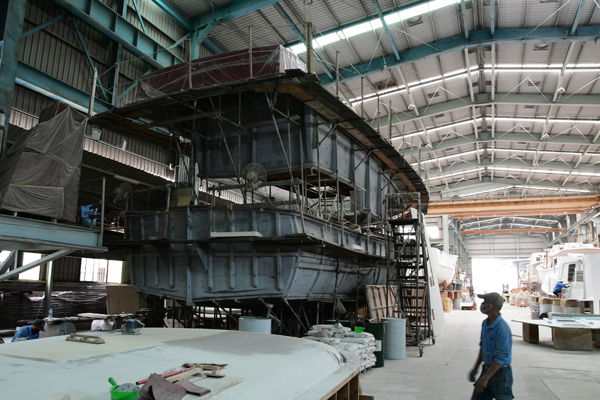
Hull and deck molds inside Asia Harbor’s cavernous shed, in Kaohsiung, Taiwan.
I have also been to the American Tug factory in La Conner, Washington. It too was squared away, clean and produced high-quality products. My heart goes out to the staffs at these yards, and of course to the buyers who are left with unfinished vessels, it seems for which, in most cases, they have already paid.
In more thoughtful, and less public, industry circles there is a great deal of speculation as to why things shook out the way they did for KKY; the bankruptcy details, and list of creditors make for heart wrenching reading. I’ll reiterate, the products were sound, and I don’t believe it has anything to do with broader economic or sociopolitical challenges, which are affecting most builders in this category equally.
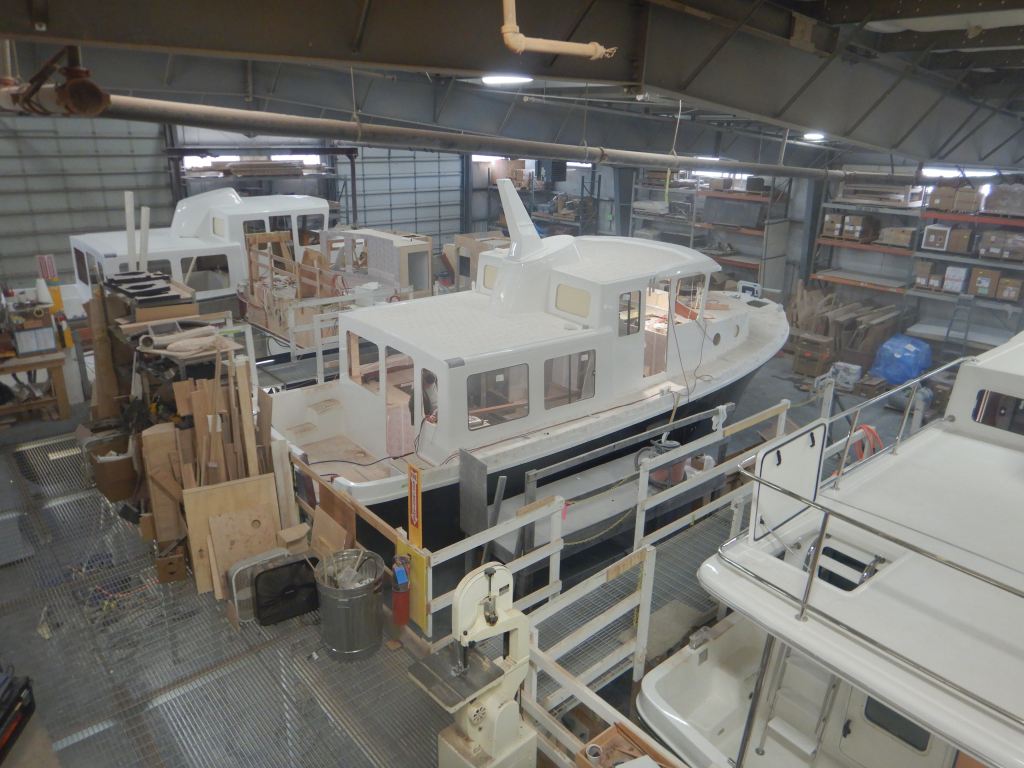
Two vessels under construction on the shop floor at American Tug’s La Conner factory.
While this failure may not be widespread, it does have an effect on the boat building industry, and sales, as a whole, because it injects doubt into the decision-making process for buyers, and understandably so. Before making the leap, my clients often express concern for building overseas, and again that’s more than reasonable, however, in this case, the overseas yard (and it appears the domestic one as well) wasn’t the issue. I strongly encourage anyone considering an overseas build, or domestic one for that matter, to consult with an attorney, one who specializes in new yacht construction contracts. More on that subject here.
Kadey Krogens and American Tugs are so well known, and the products so highly respected, that I can’t help but think someone will purchase the brands and molds, and restart production, at least that’s my sincere hope.
This month’s Marine Systems Excellence eMagazine is part II of our ongoing series on digital multimeter use. I hope you find it both useful and interesting.
Multimeters: AC and DC Voltage Measurement and Troubleshooting
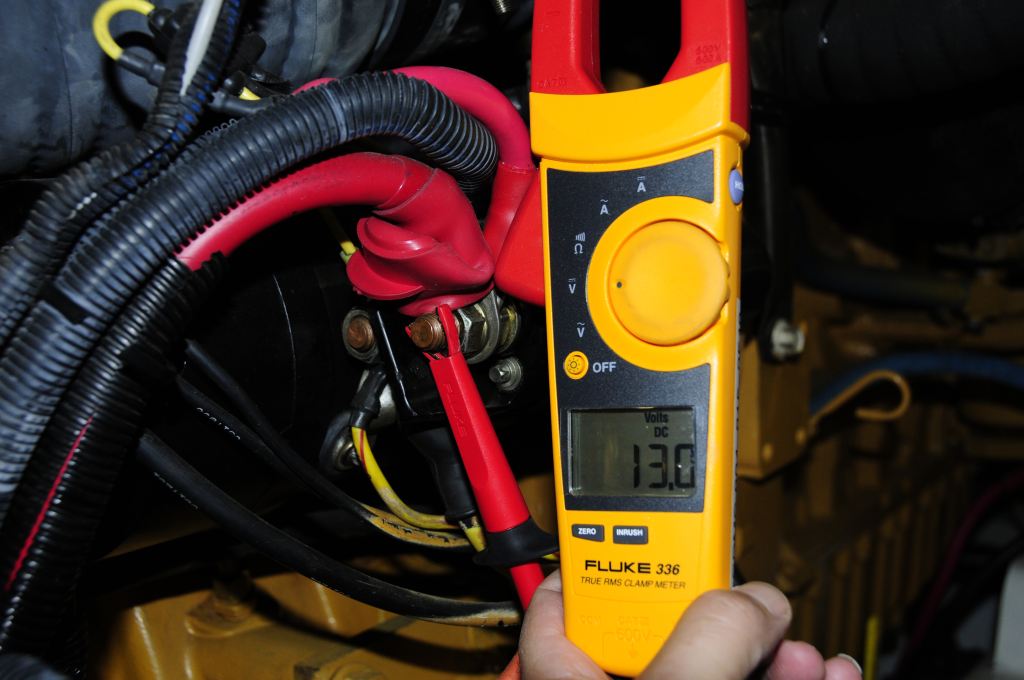
This starter has a good voltage reading at the primary post, if the secondary circuit is working it should crank.
Last month I discussed the basics of digital multimeters or DMMs. This month I’ll get more specific by delving into one of the DMM’s most useful functions, measurement of voltage and how you can use it to troubleshoot a range of onboard electrical maladies.
There are primarily and potentially two types of voltage you may wish to measure using a DMM, AC and DC. AC is essentially the type of power supplied by shore power, a generator or inverter. Extreme caution must be used when taking these measurements as this type of voltage can be lethal. DC voltage is the most commonly measured aboard small craft. It is more benign than AC although not without its potential for disaster. While you cannot be electrocuted by the DC voltage found aboard, short circuits can, because of the current involved, be catastrophic. Therefore, use caution when placing measurement probes onto energized surfaces such as battery terminals and bus bars.
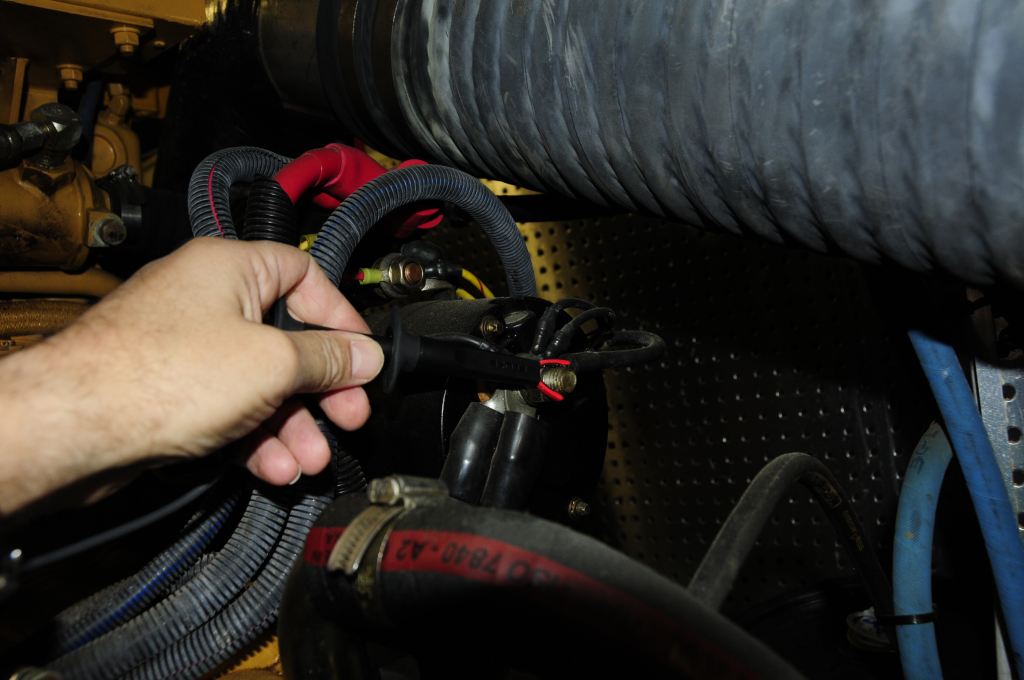
When troubleshooting a starting problem, it is important to connect the DMMs negative lead to the location where the negative source is connected to the starter, which will be either a separate stud on the starter, or the engine block.
Voltage measurements are nearly always made in parallel. That is, the meter’s lead connections parallel those of the source being tested. For example, when testing a battery’s voltage, the meter’s positive (red) and negative (black) leads are placed on the battery’s positive and negative terminals and when testing the output from and electrical receptacle, the leads are inserted into the hot and neutral (these are essentially AC terms for positive and negative) slots. By contrast, ampere measurements, which I’ll discuss in an upcoming column, are made in series.
Failure of an engine to start is never a pleasant scenario and it’s one of the most common and useful applications for voltage measurement and troubleshooting. Using your DMM, you can quickly diagnose or narrow down the problem. If you turn the key to the on position (not “crank”, just on, instrument lights illuminate, gauges move, a low oil pressure alarm may sound), and nothing happens, you get no low oil pressure alarm and no instrument movement, or if you turn the key to the crank position and nothing happens, the problem is certainly electrical. Begin by testing for voltage at the start battery. A fully charged, rested (with no charge source present) battery should read between 12.6 and 12.8 volts.
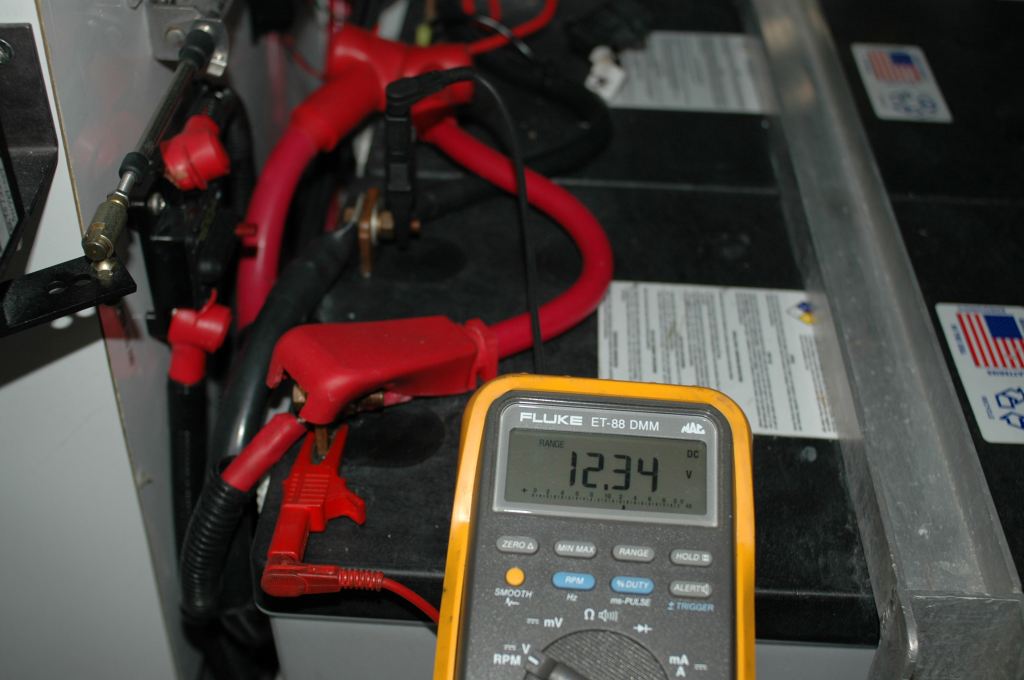
A fully charged, rested, i.e. not being charged for several hours, battery is 12.6-12.8. This battery is about 50% discharged. While not ideal, it should still crank an engine.
It’s important to note that the difference between a fully charged battery and one that’s essentially dead is a scant six tenths of a volt. So, if your battery reads 12.0, it’s fully discharged. If the battery voltage is correct, somewhere between 12.4 and 12.6, move on to the primary post on the starter (make sure the battery switch is on). The primary post is the large stud to which an equally large, usually red cable is attached. It should be covered with an insulating boot. Connect the meter’s negative probe to a good ground. That is a clean metal surface on the engine, preferably one of the large starter securing bolts, or the bolt that secures the large primary negative cable to the engine block or starter in the case of an isolated ground starter. The distinction is important, if the starter ground is isolated, you must use its DC negative cable for voltage testing. Ensuring that your meter is well grounded is important, if it’s not, your readings will be meaningless (if you are unable to establish a good ground at the engine, that too may be the problem).
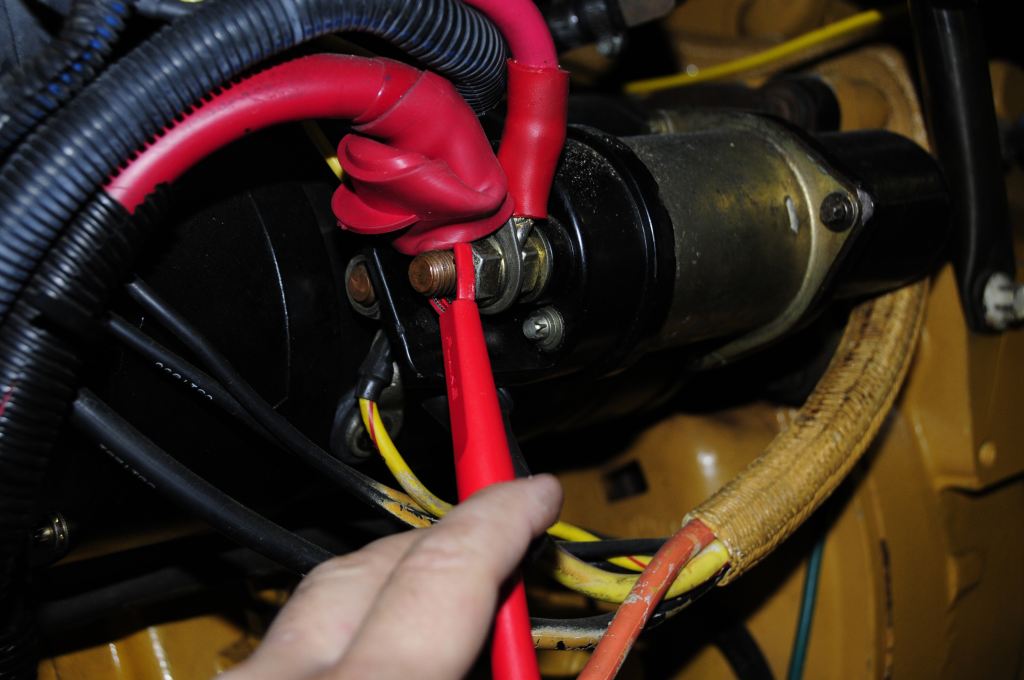
Measuring voltage at the starter’s primary post confirms it has voltage (and a high current feed, I’ll discuss that next month) available for starting.
The voltage reading you see here should be virtually the same as that of the battery; if it’s zero or very low, the issue lies between the battery and this location. If it’s correct, try cranking the engine, if the voltage drops precipitously, but the engine still does not crank, you have either a poor connection or a battery that’s ready to be recycled.
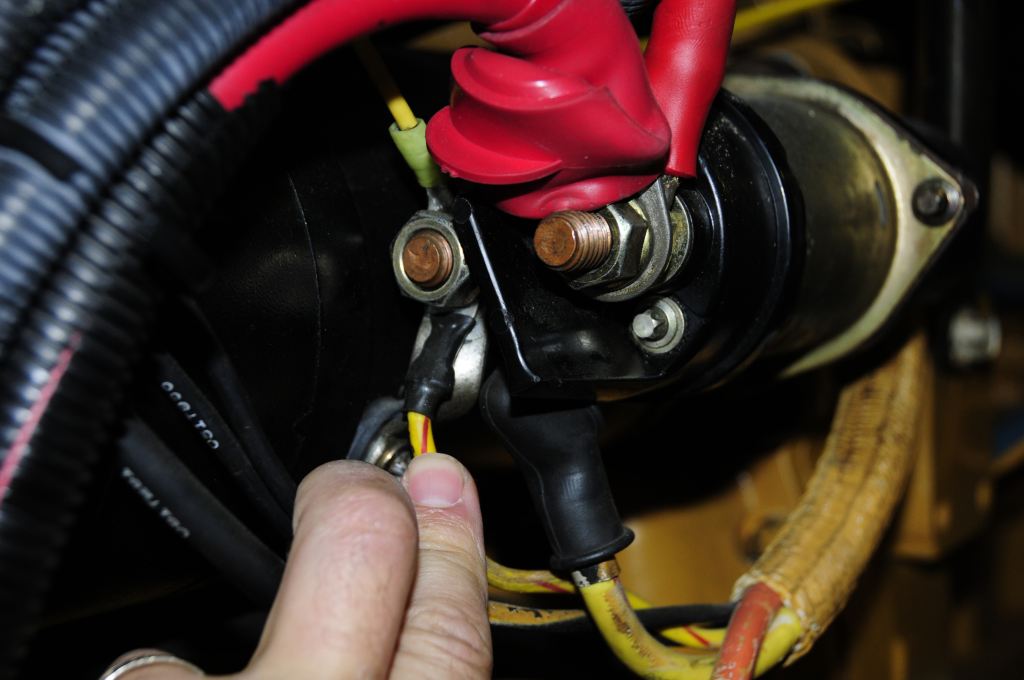
The starter’s secondary terminal, which usually has a yellow wire with a red stripe, is where the starter receives voltage from the key switch, or start button, when it is turned to the crank position.
If you have voltage at the primary post and nothing happens when you attempt to crank, move the DMM’s positive test lead to the starter solenoid secondary connection. This will be a small gauge wire that is often, but not always, yellow with a red stripe. This wire should be energized with battery voltage when the key is turned, or starter button pushed, to the crank position. If no voltage is present, it’s likely a poor connection or defective switch. If voltage is present, the starter solenoid is defective; in a pinch it can sometimes be repaired or simply replaced. Next month we’ll discuss ampere measurements and more troubleshooting.