
From the Masthead

Soliciting Negative Feedback
If you are a parent, then you know the last thing young children and adolescents want to hear is criticism, even if it’s constructive. Interestingly enough, most adults are the same way, and few among us actually go so far as to solicit honest feedback, especially if, it’s negative.
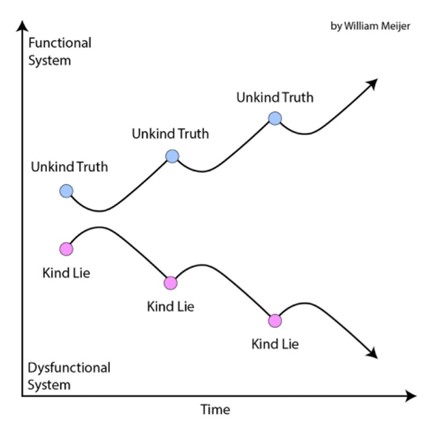
However, negative feedback is necessary, in life and business, because without it you are unlikely to ever improve. Kind lies lead to lack of progress, if not disfunction. Unkind truths, while initially unpleasant, are the only way an individual or organization rights wrongs, and becomes more effective, efficient and productive. I’ve known and worked with people who are highly resistant to criticism; the result is, there’s a tendency to just give up trying to share anything even mildly constructive with them because it’s not worth the aggravation. When it’s an employee, or co-worker, or someone you have hired to carry out work, whether it’s repairs on your engine, or building you a boat, you can’t just give up, so the issue must be confronted.
When I managed a boat yard, the employee review questionnaire, with which every employee, including me, was annually evaluated by his and her peers, included these questions, which were graded on a scale of 1-5, “Acknowledges and apologizes for mistakes”, and “Is easy to approach with a problem or concern”. If an employee consistently scored low on either, or both, of these, it was concerning, and did not bode well for their future at the yard. Above all else, if an employee could not accept constructive critique, I could never be confident that they would not make the same mistake again. If it’s a “soft” issue, like forgetting to charge for materials on an invoice, that’s a problem, and can cost the company money, so definitely something that could not be ignored. However, if it’s a “hard” issue, like repeatedly forgetting to tighten hose clamps, or installing undersized wires, then the results could be catastrophic. If an individual cannot accept the constructive criticism, acknowledge it was wrong, and agree to make a concerted effort to not do it again, then it’s likely the error will reoccur.
I like this graphic from William Meijer, it clearly characterizes the effect of the absence of honest, constructive feedback. Note the subtle “hooks” after each event, a momentary upturn and downturn after each. That is very significant; immediately after receiving constructive criticism, most of us feel a little down, however, after acting on it, positive results, with corresponding positive feedback, are often the result. By contrast, being told a ‘kind lie’ feels good at that moment, however, long term performance suffers, and that pushes the performance spiral ever downward.
Ask yourself this question, ‘Is my response to constructive feedback welcoming or at least positive?” If the answer is an honest ‘no’, then there’s a good chance that those around you have stopped providing it, and the loss is yours.
This month’s Marine System’s Excellence feature covers the subject of piston ring blow by. I hope you find it both useful and interesting.
Of Piston Rings, Cross Hatch, Blow-By and Carbon
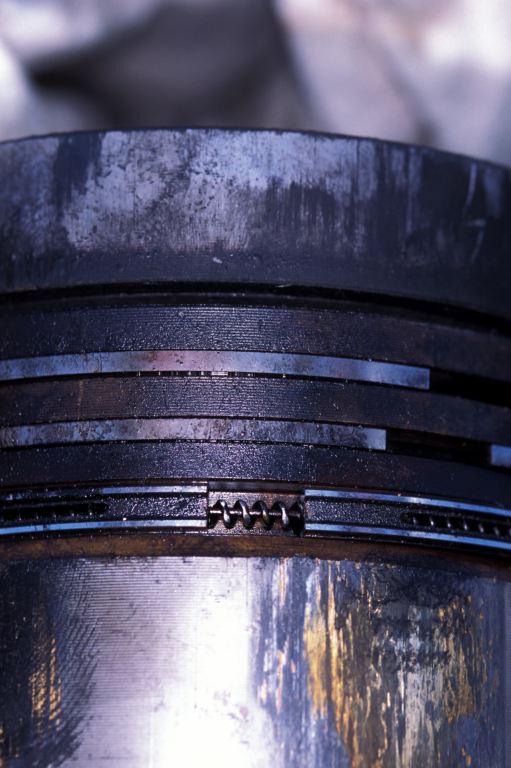
Piston rings typically include a set of two compression rings, top in this image, and an oil control ring, which in this case is a single, one-piece ring, which is installed over an expansion spring. The latter ensures the ring maintains even pressure on the cylinder wall for the most effective oil scraping. In this case, this image represents a very worn set of rings that appears quite wet with diesel fuel or oil. High blow-by was almost certainly present. The rings also appear to be seized in the piston grooves or lands as a result of carbon deposits, which in turn prevents ring rotation and causes uneven bore wear. Rings should rotate at about 7 rpm to clean the ring lands and ensure even wear.
There is an aura surrounding diesel engines, one of legendary reliability and long life. With few exceptions it’s well-earned, because of their design and comparative simplicity (that’s changing, for better or worse, with more stringent emissions requirements and ever-increasing computerized control) diesels tend to run and run. When they do fail in most cases it’s the bolt-on accessories that actually quit; heat exchangers, raw water pumps, turbo-charger or after cooler, and exhaust manifolds, rather than the engine itself.
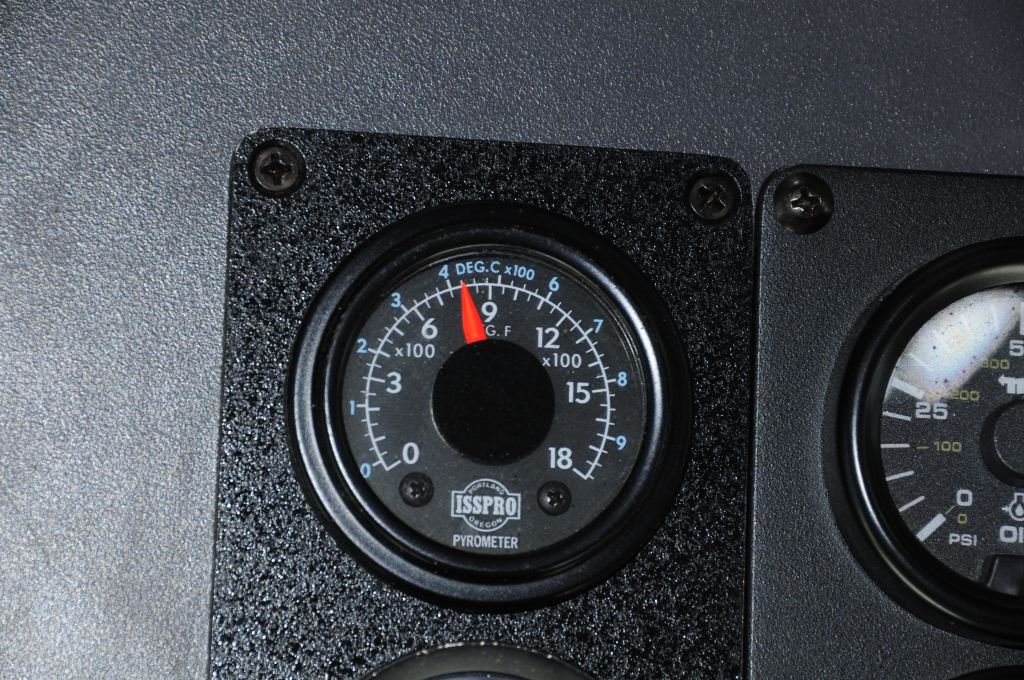
Chronic under-loading leads to too-cool combustion chambers, which in turn can cause excess soot formation.
While accessory component failures are the most common, there are other scenarios that can strike at the heart, literally, of your engine, some of which are especially insidious. When a diesel engine is frequently lightly loaded, when it is used for battery charging alone, as is the case with so many generators, or sail auxiliaries for instance, or planing vessels operating regularly at displacement speeds, cylinder temperatures often remain low, too low to support efficient combustion, wherein fuel is burned incompletely, thereby creating excess exhaust byproducts, soot, carbon and water. These contaminants accumulate in combustion chambers, on exhaust valves and seats, on piston crowns and, most importantly, they clog piston ring lands.
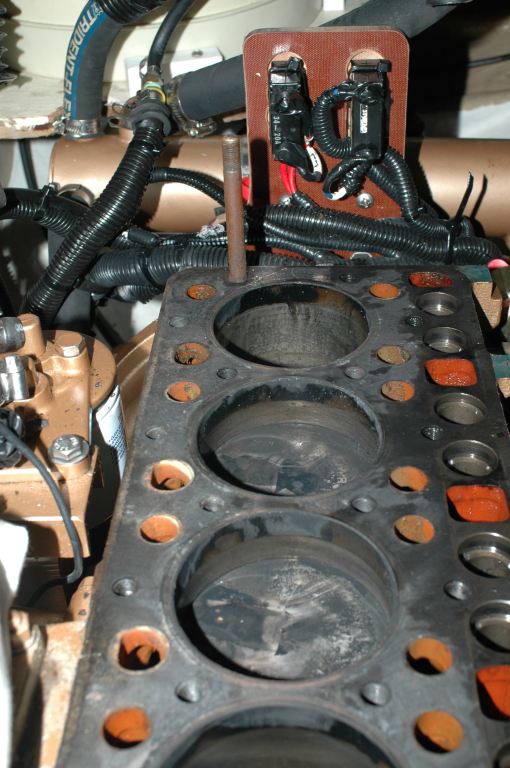
Light loading, over-fueling, air starvation and other causes can lead to excess soot production, which in turn can cause rings to clog, and malfunction.
Piston compression rings are made from a hard, often chrome-plated cast iron or steel alloy, and the role they play is critical, acting as a super-tough gasket between fast-moving pistons and stationary cylinder walls, as well as a conduit for transferring heat from pistons to cylinder walls. C-shaped, their springiness allows them to expand and contract with temperature changes while still maintaining good contact with the piston groove or ‘land’ in which they reside, and the cylinder wall.
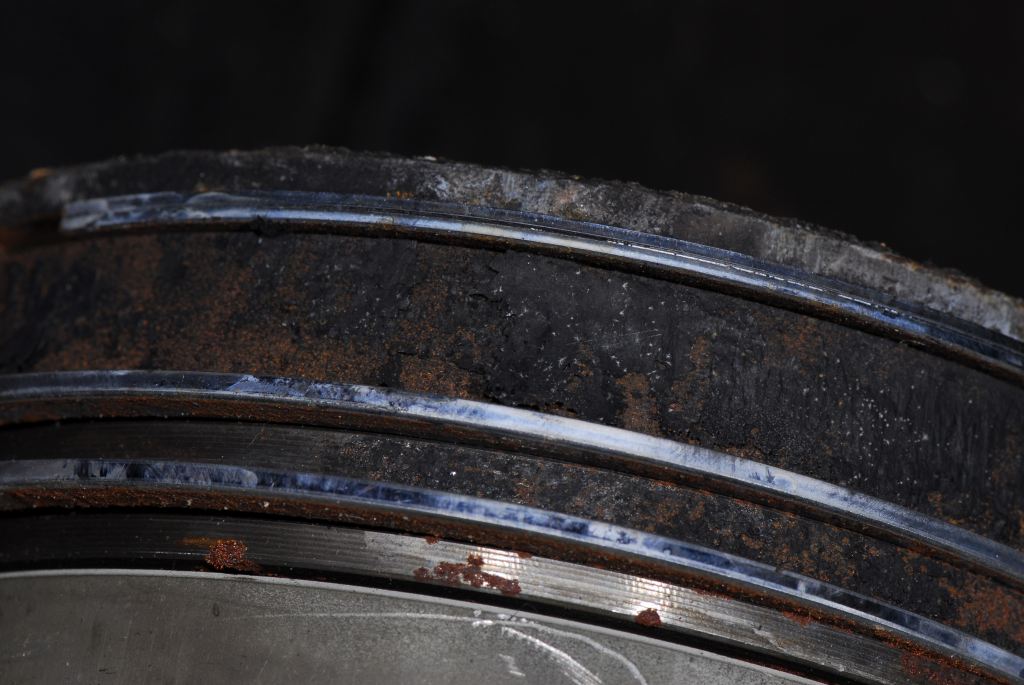
The engine this piston was installed in suffered sea water intrusion, from a leaking aftercooler, which has caused the rings to rust.
This simple mechanical marvel can go awry, however, if the land and ring gap become clogged with soot. When this occurs the seal is compromised, with the result being leakage into the crankcase of pre-combustion compressed air, and exhaust gasses, which include both soot and water, none of which is good for the engine, its power, fuel efficiency or longevity, as well as contaminating crankcase oil. Additionally, when clogged, rings stop rotating, a feature that ensures even wear.
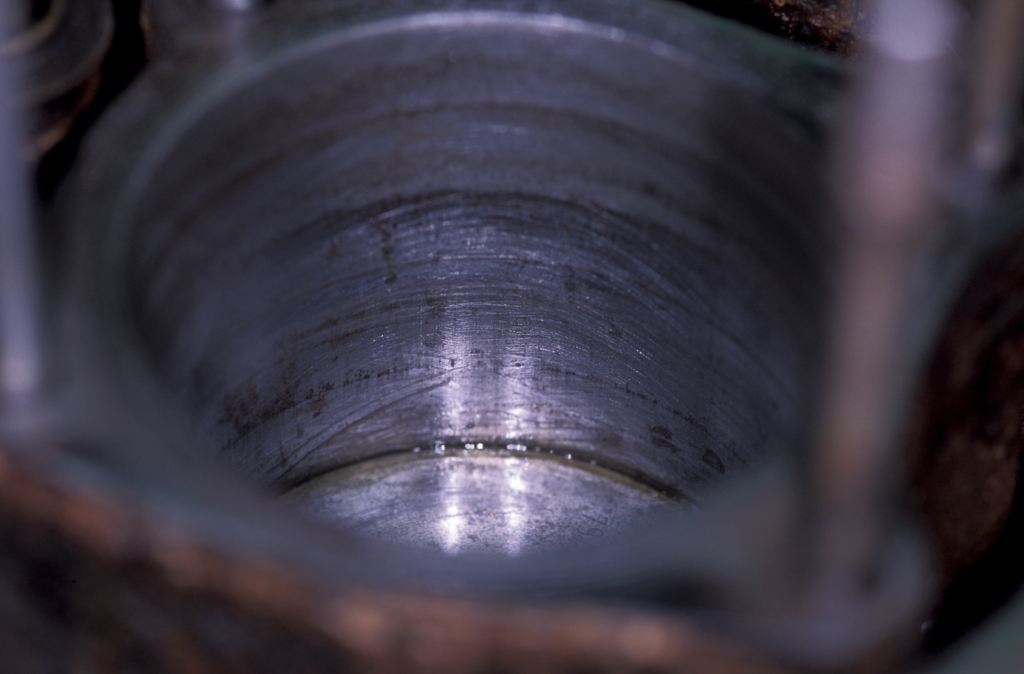
This cylinder wall is damaged from corrosion, and as such the rings have also likely suffered as well.
Pistons are equipped with yet another set of rings, which are used to control oil distribution to cylinder walls; these are called ‘oil control rings’. These rely on fine grooves cut into the cylinder walls, referred to as “cross-hatch”, to retain lubricating oil on this otherwise smooth surface (that cross-hatch can become clogged with oil residue and carbon, leading to what’s known as ‘glazing”).
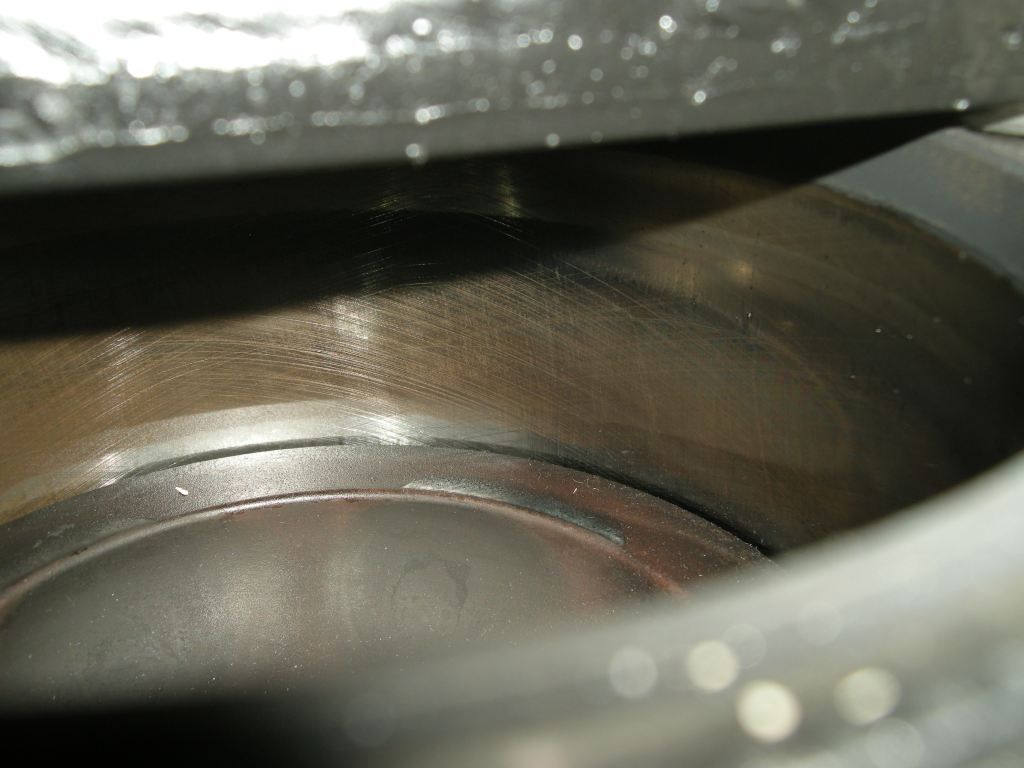
The cross-hatch pattern, which is designed to retain oil for lubrication, is clearly visible on this cylinder wall.
If the oil remained there during the combustion process it would burn, or clog compression rings with coke (the rings are very hot, which causes the oil to burn, leaving behind carbon or coke), which is where oil control rings come into play. Oil is often deposited or sprayed onto cylinder walls beneath the piston as it moves up the cylinder, and then removed or scraped away squeegee-like by the oil control rings as the piston descends.
Malfunctioning or fouled injectors can lead to excessive carbon fouling, as well as cylinder wall “washing” where fuel washes away or dilutes lubricating oil, all of which can lead to ring issues.
If, however, these rings also become clogged with soot, then they begin to allow oil to slip by, where, in a snowball effect, it further clogs compression rings, which in turn allows greater loss of compression.
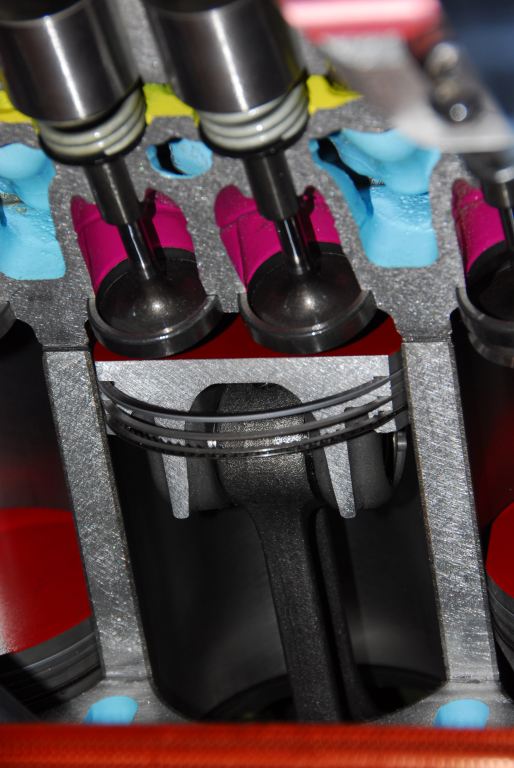
Without properly functioning piston rings, it would be impossible to generate sufficient compression to support diesel combustion. When rings leak or otherwise fail, the results can be hard starting, smoking, poor fuel economy and reduced power.
If you suspect your engine is suffering from carbon build-up, if it’s hard-starting, smokes, consumes oil, exhibits poor fuel economy and power, there are a few tests you can perform to confirm the problem is genuine. In the first, and easiest, with the engine running and warm, and at idle, carefully open the oil fill cap, if you are confronted by a continuous blast of air, one that causes a paper towel held over it to be driven upward, then things aren’t looking good, as those are escaping blow-by gasses.
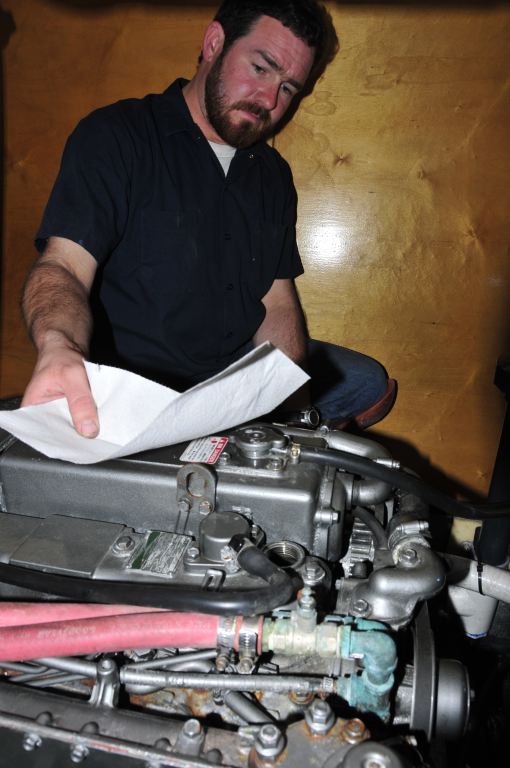
An unofficial blow-by test. When piston rings leak, either from soot clogging, wear, or cylinder glazing, gasses leak past or “blow-by” them into the crankcase, leading to excessive crankcase pressure.
For a more scientific analysis a compression or leak-down test should be performed. Each of these utilizes different tools and offer different types of data. I’ll describe those tests, along with cylinder wall glazing, in next month’s issue of Marine Systems Excellence.

