
From the Masthead
US Navy 60 Million Dollar Jet Lost Because of a Maintenance Error
I’m sure I’m not alone in my fascination with small oversights leading to costly, or catastrophic failures. It’s a subject I’ve editorialized on several occasions, including here and here.
We live in a highly complex, electro-mechanical world, one that is getting more complex every day, making the importance of attention to detail ever greater. In my work as a boat building consultant, I’m tasked with inspecting vessels that are under construction, newly completed and pre-owned, and in these inspections, I routinely encounter small defects which, in many cases can lead to, or in many cases have already led to, a significant, costly and/or dangerous failure. As recently as a week ago, I found the following small details, with potentially large consequences, while inspecting a 60+ foot vessel.
- Steering ram aft support cap fasteners are loose, the stbd side significantly. Both lack adequate lubrication.
- Victron controllers, high current cable ring terminals not making full contact with bus bar, they are being inhibited by contact with fuse bodies.
- There is an unenclosed AC wire splice under the sole in the laz, OB of inverters.
You’d have to look very closely, or know what to look for, to see these issues. The first could lead to a loss of steering, while the second has the potential to cause localized overheating and a fire. The third, if exposed to water (it was effectively in a bilge space) could result in an electrocution or fire.

An F/A-18 Hornet, like the one that was lost, on approach to the USS Enterprise.
On December 29, 1972, Eastern airlines flight 401, a Lockheed L-1011 traveling from New York to Miami, crashed into the Florida Everglades. Miraculously, 75 out of the 176 souls aboard survived. The aircraft was just a few months old. The NTSB determined the cause of the crash to be pilot error; however, the origin of the error was the distraction created by a simple burned-out dashboard light bulb, which was part of the nose gear lock confirmation system (the gear was in fact extended and locked). The light failed to illuminate, and while the crew was working on this problem, they did not realize the autopilot had been inadvertently switched from altitude hold, to Control Wheel Steering (CWS) mode in pitch. In this configuration, instead of maintaining an altitude of 2,000 feet, the aircraft maintained the last pitch setting from the yoke, which resulted in an imperceptibly slow descent; the crew did not notice this error until it was too late. I’ve been intrigued by, and studied, this event for three decades.
More recently, on May 6, 2025, a US Navy F/A-18 fighter jet was lost overboard in the Red Sea, during a failure of the carrier’s arresting gear. Three or four (depending on the carrier’s class) arresting wires are positioned on the flight deck, any one of which are designed to be caught by the aircraft’s arresting hook; the cables are designed to pay out slowly, bringing the aircraft to a comparatively gradual stop. While it is “controlled”, I’ve had the pleasure of making an arrested landing, and catapult launch, and I can attest to the suddenness of both. The arresting gear, including the cables, are under tremendous load, and thus their maintenance must be impeccable. In this case, the aircraft had partially arrested when the failure occurred; it was traveling too slowly to regain flight, forcing the crew to ejected as the aircraft headed over the side, and down toward the sea surface. Both were recovered safely.

An EA-6B Prowler catches an arresting wire, making an arrested landing aboard the USS Enterprise.
The investigation determined that a failure of the arresting gear machinery, which in turn caused an arresting cable to fail, was the source of the accident, stating, “The root cause, the investigation report said, was “the material failure of the clevis pin.” The pin lacked a washer [author’s emphasis], a small part that helps keep the system in place”.
“That maintenance oversight ended with a jet in the water and two aviators overboard. As the fighter jet landed on the aircraft carrier, a critical piece of the landing system blew apart, shot across the machinery room, slammed into equipment a sailor had been sitting at only moments earlier, and then hit the deck spinning “like the Tasmanian devil.”” I’ve also spent time in the arresting gear machinery room during aircraft recovery operations and to me it sounded as if something always was ‘coming apart’. The forces involved here are significant to say the least, and it was all brought to a potentially deadly, and literally crashing halt, by the absence of a humble washer.
This months Marine Systems Excellence feature covers the subject of Offshore Passage Preparation. I hope you find it both useful and interesting.
Offshore Passage Prep
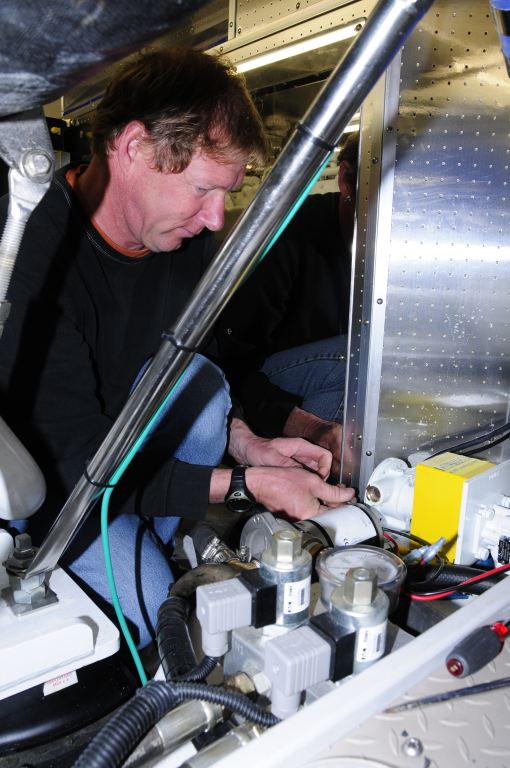
The vessel’s captain presses a hot water circulation pump into raw water-cooling service.
Since making my first blue water passage aboard the 120-foot steel schooner R/V Westward nearly 40 years ago, I’ve developed a strong appreciation for what’s involved in maintaining a vessel that will venture offshore, or to locations where support and resources are limited. During the passage aboard that well-found vessel, from Cape Cod to the Grenadines and ultimately the British Virgin Islands, a variety of repairs were carried out. Even for the day, Westward was a relatively unsophisticated vessel, salt water showers, no air conditioning, much of the gear was original equipment dating to her 1961 construction by Abeking and Rasmussen, including the pneumatic start MaK diesel (the same manufacturer that provided engines for Germany’s U Boats during WWII). Navigation was accomplished primarily with compass, paper charts and sextant, and with LORAN when in range; GPS had not yet become a reality. The emphasis was on sail training, science and seamanship. Maintenance was also part of shipboard life, students were introduced the tools of the trade, primarily chipping hammers, scrapers and paint brushes. With a crew of college students, labor was both cheap and plentiful, and if you were fortunate enough to know which end of a wrench was up, you got to work in the engine room. I have fond memories of rebuilding my first raw water pump under the watchful eye of the ship’s engineer.
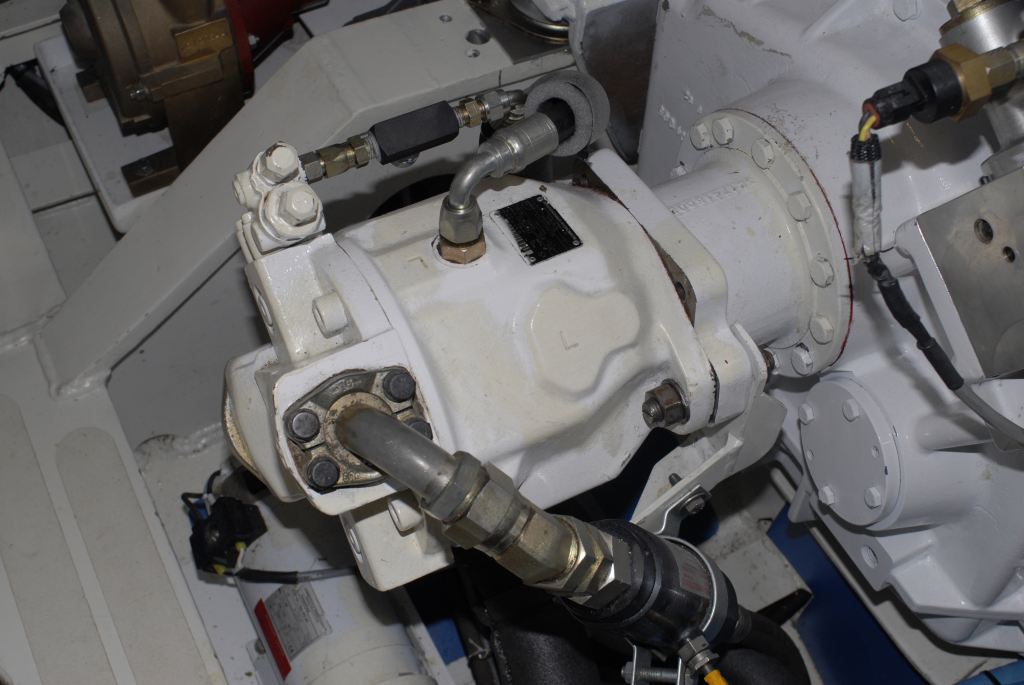
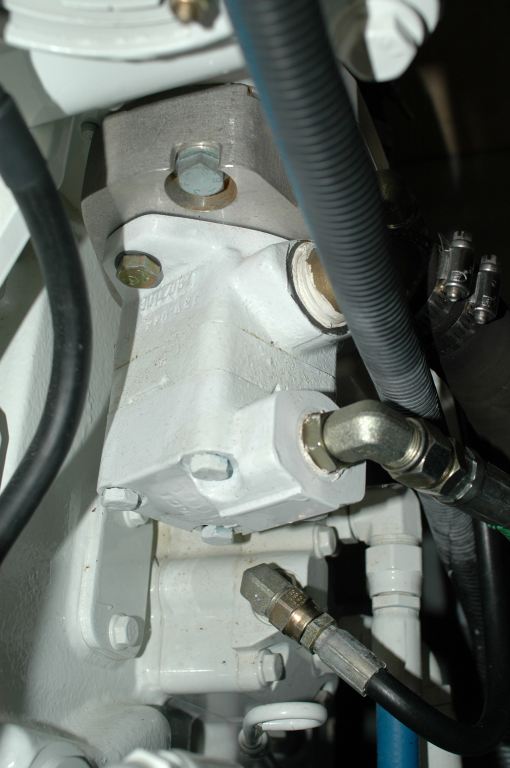
Depending on their mission, hydraulic pumps range in size, from diminutive to beasts.
Today, with few exceptions, the lay of the technical land has clearly changed, the complexity of vessels has grown by orders of magnitude. Even the vessels that replaced Westward are equipped with computers, inverters, GPS and air conditioning (to be fair, the AC is in the lab areas only).
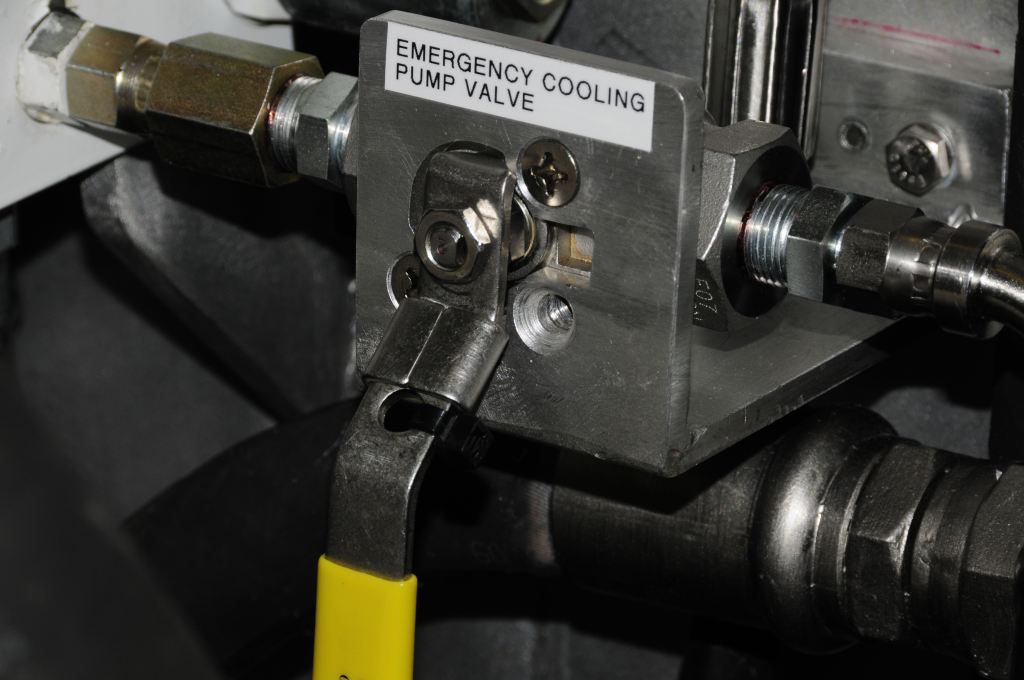
Back up hydraulic cooling systems are typically installed with valves, so water flow can be directed to the active pump.
Preparing a vessel for such passage making, be it power or sail, recreational, commercial or military, involves a clear and thorough understanding of the necessary spare parts that may be needed as well as an understanding of the vessel’s systems and how they operate. The latter is often overlooked by many vessel owners and operators. For those building, repairing or outfitting the vessel, there is a clear advantage, some would argue obligation, to alerting owners and operators to systems that, should they fail, are likely to lead to larger issues such as loss of control, propulsion or floatation. Such failures are often of the cascading variety.
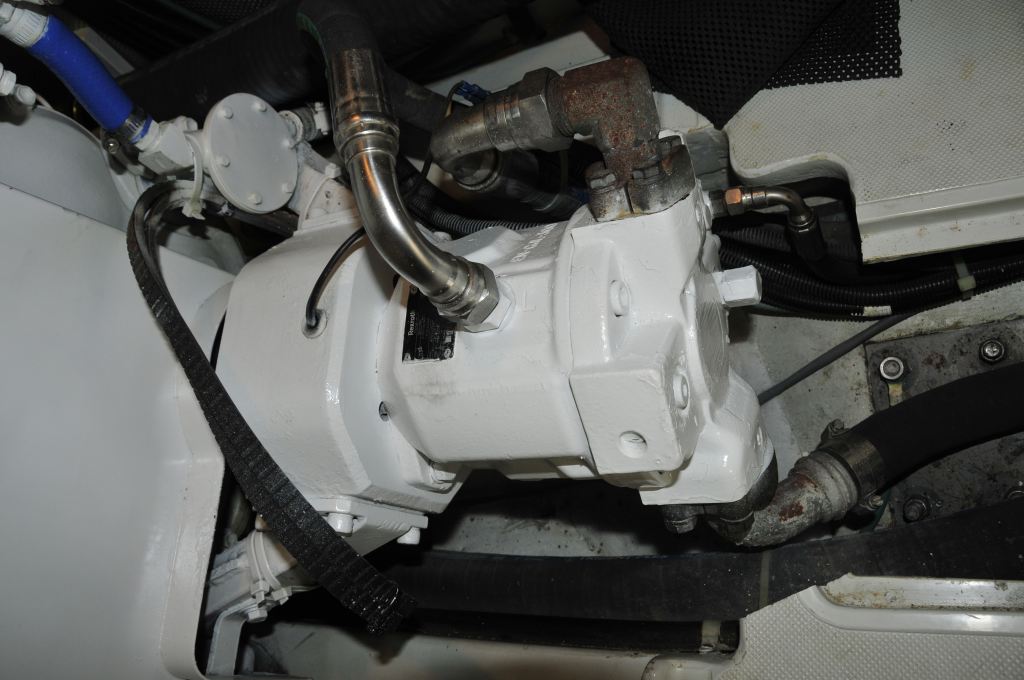
This hydraulic pump is connected to a wing engine via an electric clutch.
Several years ago I completed a month-long passage aboard a similarly well found 65-foot cruising motor yacht, from Scotland to Iceland via the Faroe Islands. The vessel was built to the highest standards; having inspected many examples from the same builder over the course of my career, as well as this particular model, I was more than confident in both her seaworthiness and systems installations.

With full hydraulic functionality, the vessel leaves the harbor at Heimaey Island, in southern Iceland.
A few hours after departing from Stornoway, Scotland, however, an alarm sounded indicating that the temperature of the hydraulic oil used for the vessel’s stabilizers was rising, and while it was not yet at a critical level, all eyes were upon the gauge thereafter. It continued its inexorable climb and eventually the decision was made to seek shelter in the lee of the Butt of Lewis (the northern most tip of the Isle of Lewis, on which Stornoway is also located) to effect repairs. After setting the anchor it was discovered that the raw water-cooling pump impeller, used to cool the hydraulic fluid, had failed. Not only did the impeller fail, it failed in such a way that the remnants, instead of breaking into the familiar small pieces flexible impellers are wont to do, melted into a congealed and solidified mass within the pump. Clearing the pump of all of these pieces would have involved time consuming disassembly and the weather was good, at the moment, a phenomenon that rarely lasts in this region, the Butt of Lewis is known as one of the windiest locations in the UK.
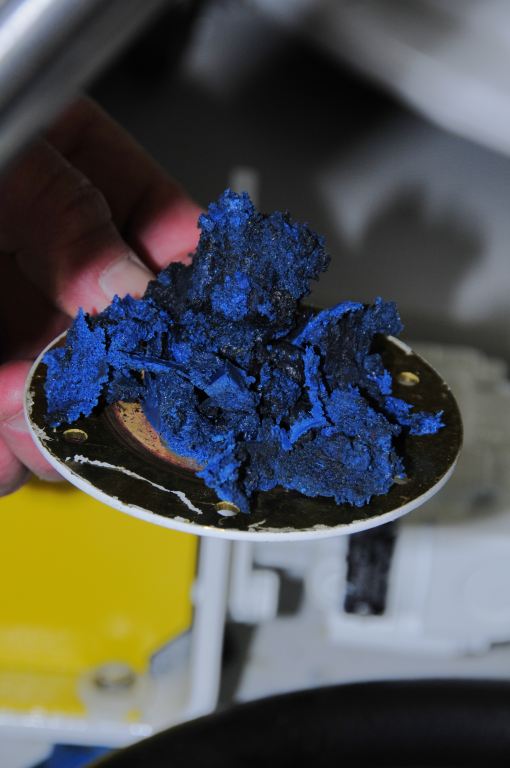
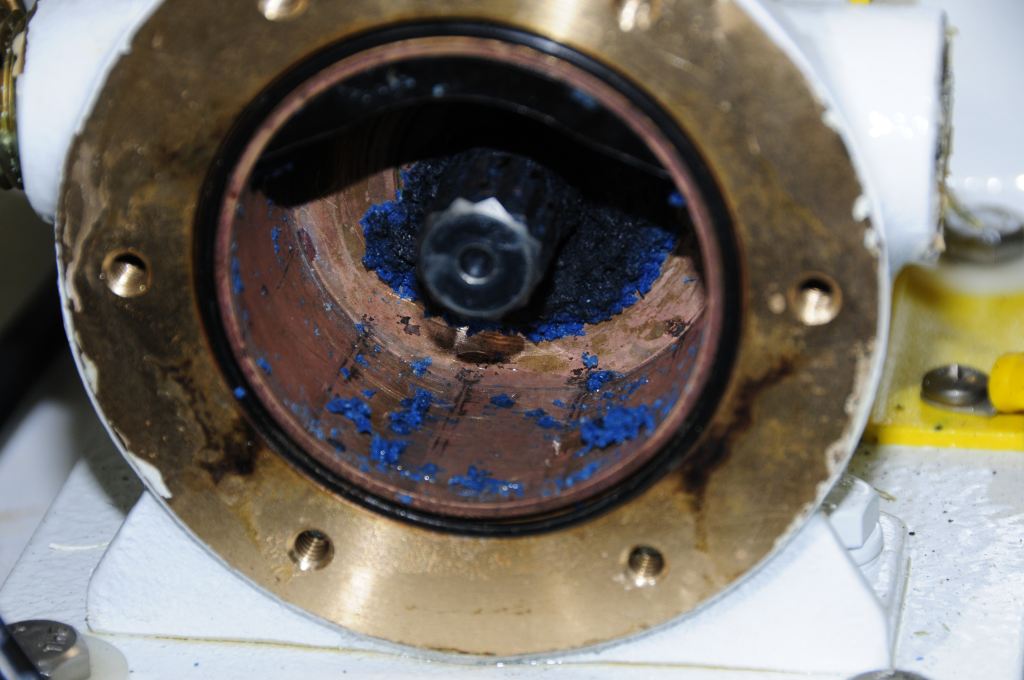
The failed raw water-cooling pump.
While abandoning the stabilizers for this leg of the journey may have seemed like an option, albeit an unpleasant one, the run to the Faroes was estimated to require roughly 24 hours and the North Atlantic isn’t known for its quiescence, in fact it was easier said than done, and here’s where the earlier-mentioned segment about knowing the vessel and its systems comes into play. In the end, we scavenged a pump from the vessel’s hot water circulation system, and continued on our way.
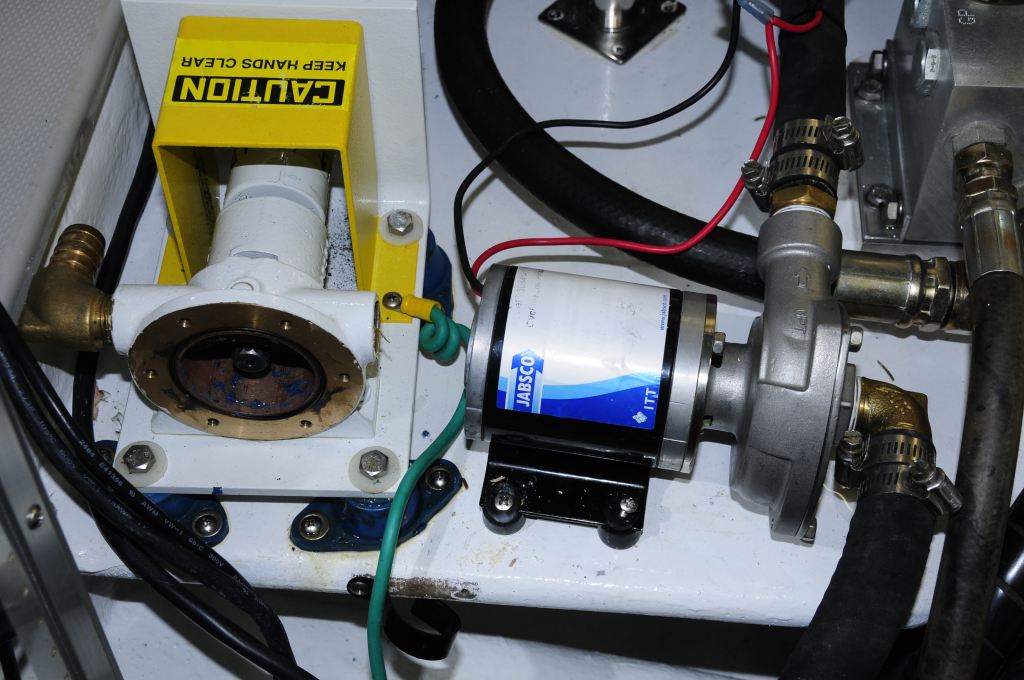
A primary hydraulic cooling pump, partially disassembled, left, and a backup pump.
Once the sole domain of large yachts, and commercial or military vessels, hydraulic systems are increasingly found on smaller and smaller cruising vessels, they are used to actuate and control not only stabilizers, but thrusters, windlasses, cranes, winches and steering systems, among other gear. While initially more costly than similar electric gear, hydraulic equipment is known for its reliability, particularly in the marine environment, as well as its brute strength. Hydraulic thrusters, for instance, as anyone who has used them knows, typically offer a 100% duty cycle, something that cannot be said of their electrically powered brethren. I have inspected both hydraulic stabilizer actuators and bow thrusters, and found them to be completely submerged within their compartments, and still fully functional.
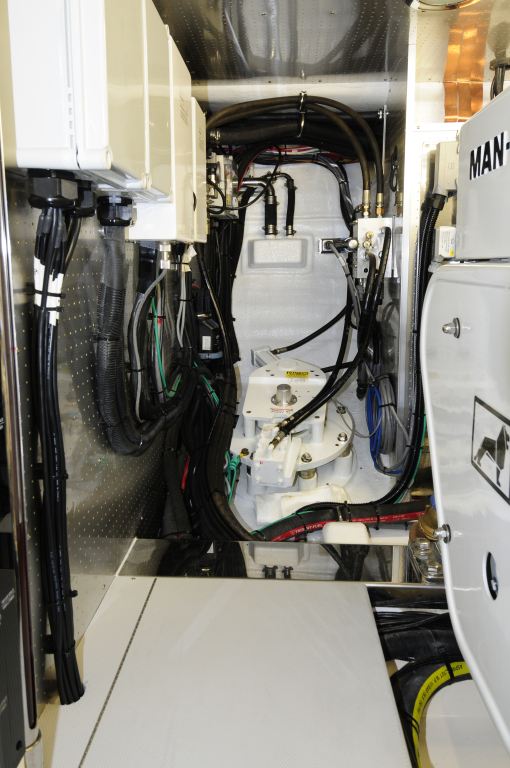
Hydraulic components are renowned for their durability and ability to operate under the most severe conditions.
A potential liability for hydraulic systems, however, and one I faced in the story related here, is the “live” nature of hydraulic pumps used on many small and intermediate installations. That is, the hydraulic pump, which is typically powered by a gear-driven power take off located on the transmission or the engine itself, is always turning, regardless of whether or not the hydraulic system is doing any work.

Hydraulic pump splines, these typically engage mating female splines in an engine or gear mounted power take off device. These splines should always be thoroughly greased before assembly.
As long as the engine is operating, the pump is pumping fluid, even if only re-circulating, and it’s generating heat, heat that must be dissipated. How long it may take to overheat in the absence of cooling water depends on a variety of factors. Once the fluid overheats, however, hydraulic pump seizure becomes a real possibility and, with a live pump seizure, nearly always leads to damaged components, either the pump and/or those in the engine or transmission.
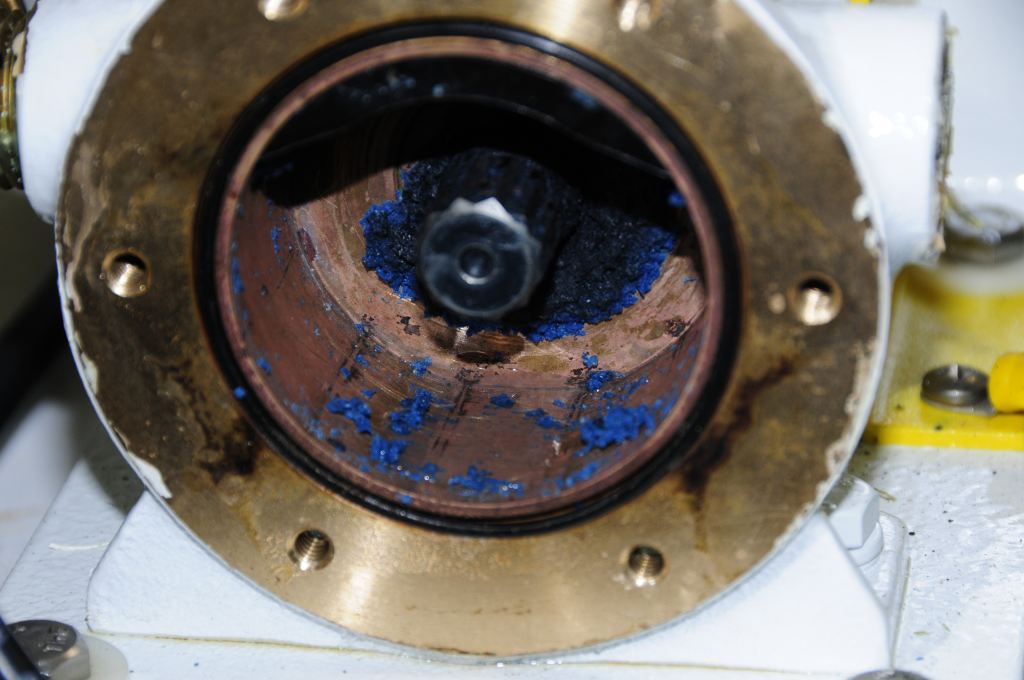
Without fluid, a hydraulic system will grind to a halt, literally.
Perhaps of greater or more immediate concern is the chain of events that may occur with such a system in the event hydraulic fluid is lost, i.e. if a hose should fail. Almost as soon as this occurs the pump loses lubrication, which in turn leads to rapid heat generation and eventual seizure, which then leads to gear and shaft shearing, possibly bringing the engine, or propulsion system at the very least, should the transmission be damaged, to a halt.
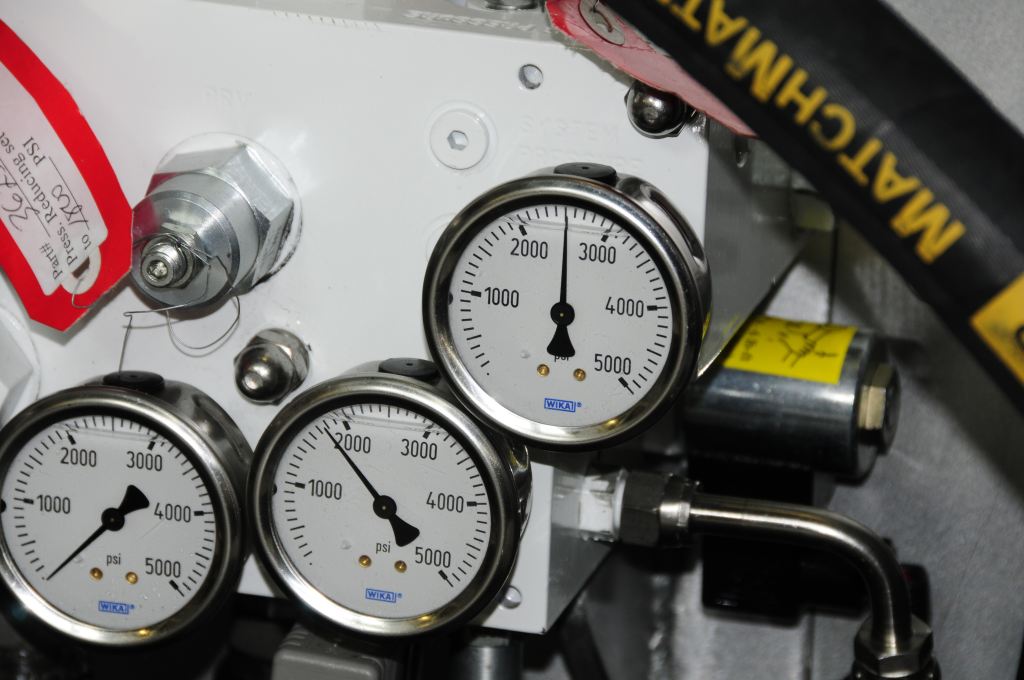
This hydraulic stabilizer and thruster system operates at two different pressures, around 1200 and 3000 psi respectively, making hose and fitting integrity of the highest importance.
It’s important to remember that these scenarios involve gear-driven, live hydraulic pumps, pumps that are bolted to the engine or transmission and lack a clutch. This accounts for pumps used on most of today’s small systems and many moderately sized systems where space (or budget) prohibits the use of a clutched PTO (if space permits, a clutch can nearly always be included). It’s also important to remember, if twin pumps are used, one on each engine in a paralleled system, the most common arrangement, fluid loss will similarly affect both pumps.
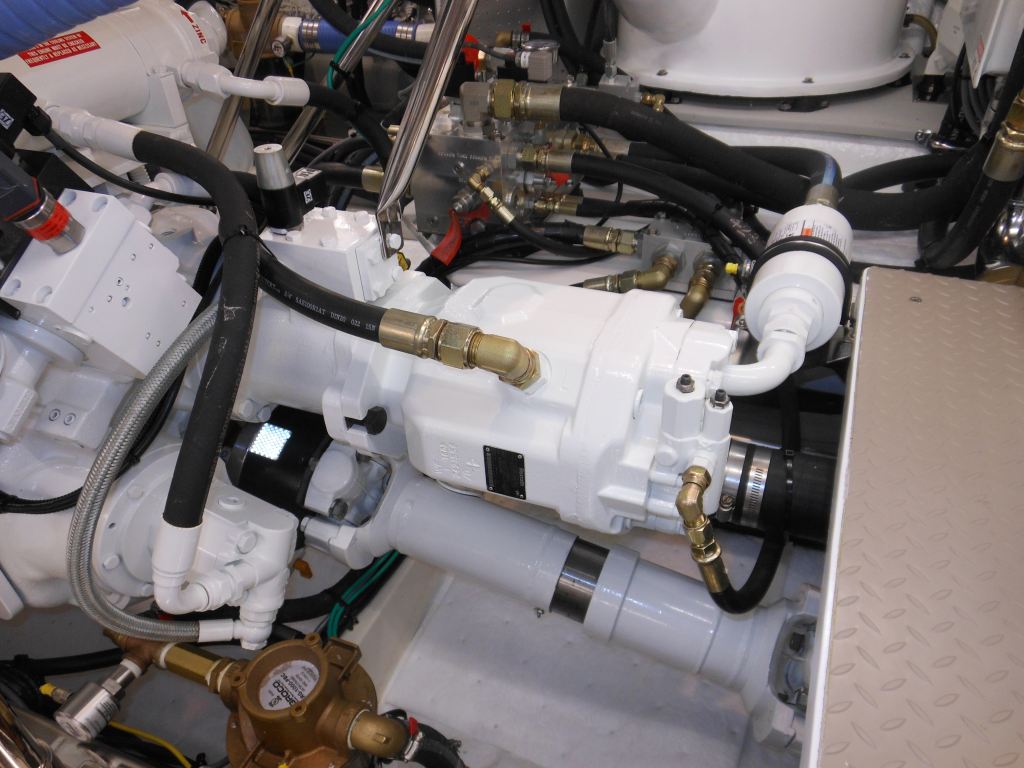
A clutched hydraulic pump running off of a marine gear power take off (PTO).
In my experience, few vessel owners or even professional skippers are aware of this potential weak link in a vessel’s hydraulic system. A failed raw water pump, or even just the impeller, may lead to a cascading chain of events that result in loss of propulsion.
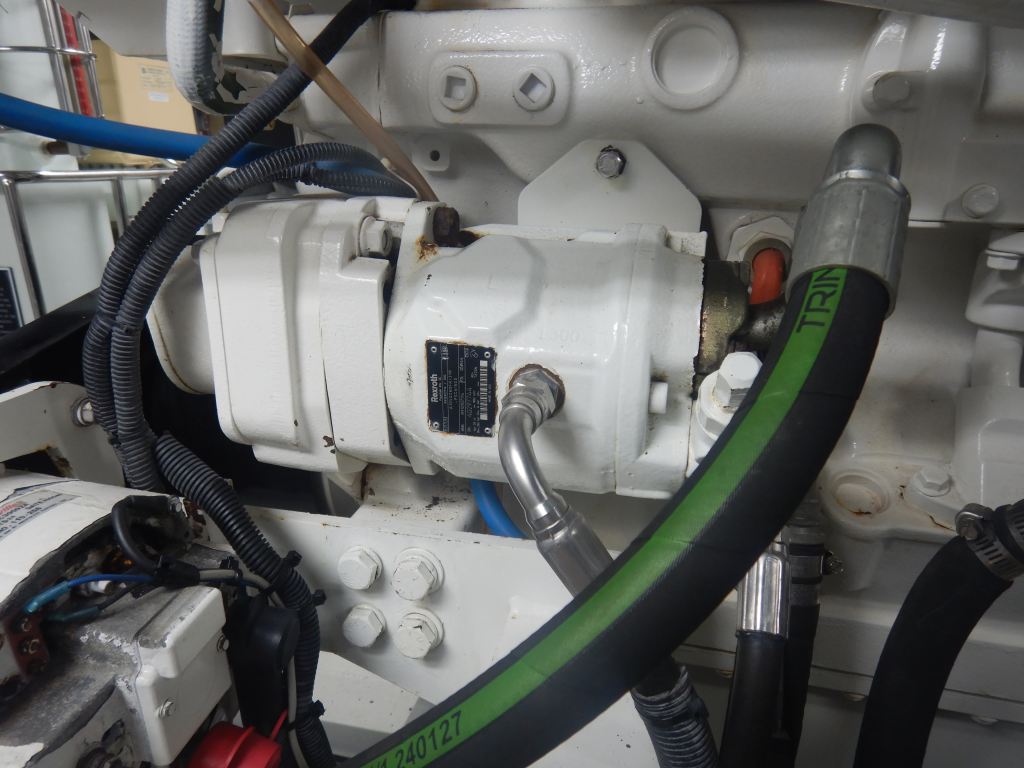
This live PTO pump is driven from an engine’s timing gears. If the pump were to seize, those gears would almost certainly be damaged.
Fortunately, the immediate and temporary solution to such a problem is not complex. In the event of a loss of hydraulic fluid cooling water, the first actions should be to take hydraulic equipment off line (many systems will do this part automatically when an overheat alarm sounds) and slow down. Less load means less heat generation in the system and the slower the engine turns, the less fluid is pumped and again, less heat is generated.
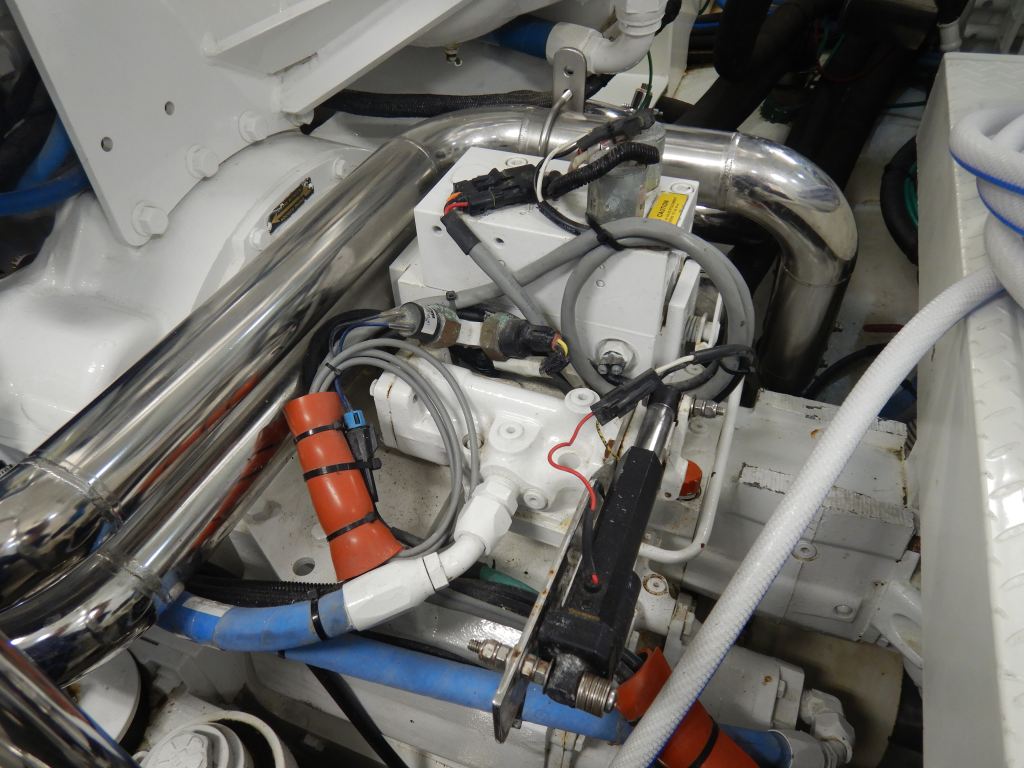
This hydraulic pump is connected to a marine gear via a clutched PTO. The engagement mechanism is actuated by a linear electric drive, which is completely external, making it possible to operate manually.
It’s likely that the life of the hydraulic pump can be measured in minutes if not seconds once it’s lost all fluid and lubrication. Therefore, if the vessel is to continue on, the only solution is to remove the hydraulic pump from the PTO on the engine or transmission. A metallic blanking plate should be made and remain aboard as part of the vessel’s spare parts kit (it can be secured to the engine adjacent to the pump); it would be installed over the orifice on an engine and some transmissions where the pump once resided. The function of the blanking plate is to keep oil in and dust, dirt and debris out of the engine’s lubricated components. If the pump can be separated from the PTO adapter, without exposing a gear train, then no blanking plate is necessary.
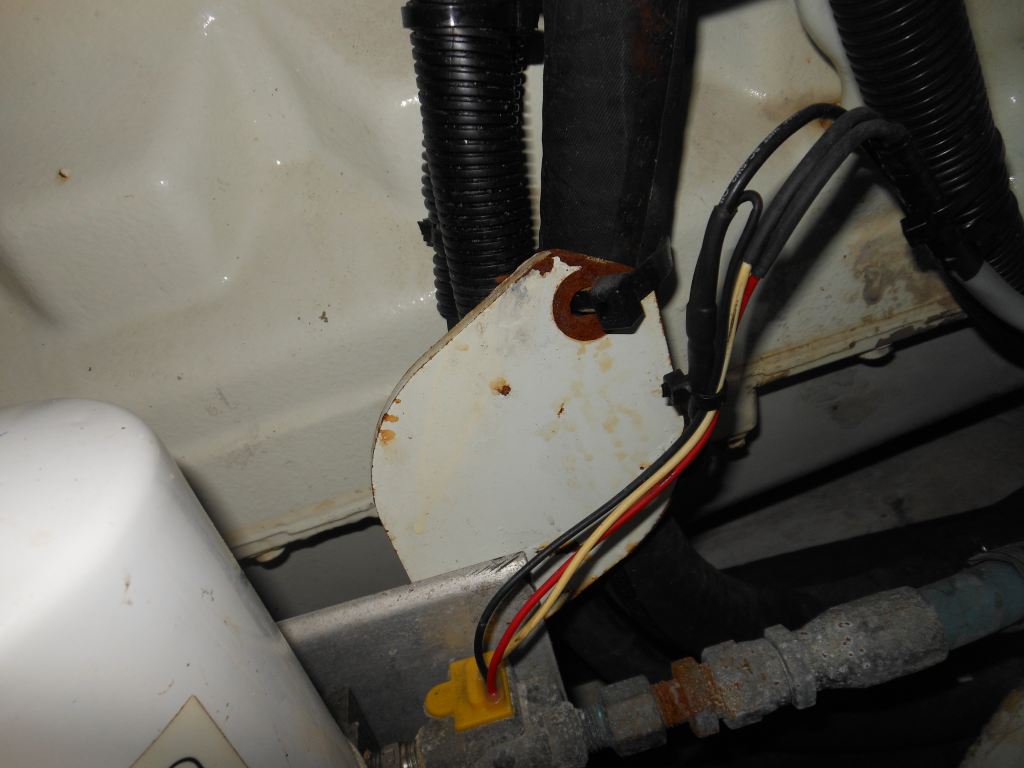
A blanking plate, used to cover the hole left by a removed hydraulic pump, can be attached to the engine so it is easily accessed when needed.
As a boat builder, boat yard or equipment installer or service technician it is incumbent upon you to educate your client about this attention to detail item associated with live hydraulic pumps. The resolution, as explained, is relatively straightforward, however, in the absence of the necessary knowledge the results range from costly and inconvenient to catastrophic and life threatening, the latter in the event propulsion is lost on a lee shore, or in unsettled or otherwise rough sea conditions for instance.

